

Spring
Special
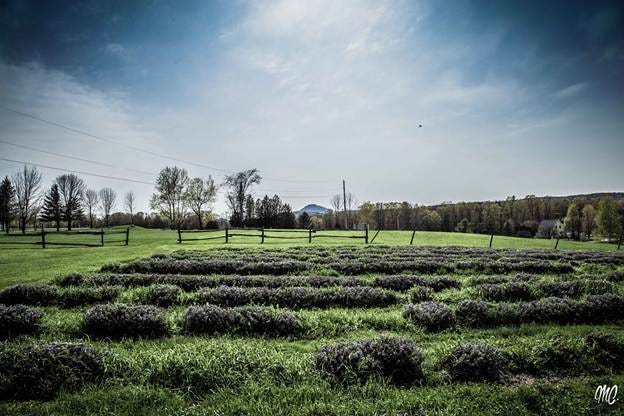
Rows of early-season growth stretch across a field in Fitch Bay, Que., as spring takes hold in the Eastern Townships. Photo by Cantons de l’Est (Creative Commons), taken May 19, 2019.
Editor’s note: The following excerpt is paired with The Rite of Spring (Le Sacre du printemps) by Igor Stravinsky, performed by the Columbia Symphony Orchestra under the composer’s direction in a 1961 recording. The composition, first performed in 1913, is widely recognized for capturing the raw, elemental force of the changing seasons—making it a fitting accompaniment to the arrival of spring.
The text is an unedited excerpt from Henry David Thoreau’s Walden (1854), drawn from the “Spring” chapter. In it, Thoreau closely observes the gradual thaw of winter and the quiet but powerful return of life, from melting ice to the first birdsong. Together, the music and text offer two distinct interpretations of the same seasonal shift—one intense and orchestral, the other patient and reflective.
By Henry David Thoreau
At length the sun’s rays have attained the right angle, and warm winds blow up mist and rain and melt the snow banks, and the sun dispersing the mist smiles on a checkered landscape of russet and white smoking with incense, through which the traveller picks his way from islet to islet, cheered by the music of a thousand tinkling rills and rivulets whose veins are filled with the blood of winter which they are bearing off.
One attraction in coming to the woods to live was that I should have leisure and opportunity to see the spring come in. The ice in the pond at length begins to be honey-combed, and I can set my heel in it as I walk. Fogs and rains and warmer suns are gradually melting the snow; the days have grown sensibly longer; and I see how I shall get through the winter without adding to my wood-pile, for large fires are no longer necessary. I am on the alert for the first signs of spring, to hear the chance note of some arriving bird, or the striped squirrel’s chirp, for his stores must be now nearly exhausted, or see the woodchuck venture out of his winter quarters.
On the 13th of March, after I had heard the bluebird, song-sparrow, and red-wing, the ice was still nearly a foot thick. As the weather grew warmer it was not sensibly worn away by the water, nor broken up and floated off as in rivers, but, though it was completely melted for half a rod in width about the shore, the middle was merely honey-combed and saturated with water, so that you could put your foot through it when six inches thick; but by the next day evening, perhaps, after a warm rain followed by fog, it would have wholly disappeared, all gone off with the fog, spirited away. One year I went across the middle only five days before it disappeared entirely. In 1845 Walden was first completely open on the 1st of April; in ’46, the 25th of March; in ’47, the 8th of April; in ’51, the 28th of March; in ’52, the 18th of April; in ’53, the 23d of March; in ’54, about the 7th of April.
The first sparrow of spring! The year beginning with younger hope than ever! The faint silvery warblings heard over the partially bare and moist fields from the blue-bird, the song-sparrow, and the red-wing, as if the last flakes of winter tinkled as they fell! What at such a time are histories, chronologies, traditions, and all written revelations? The brooks sing carols and glees to the spring. The marsh-hawk sailing low over the meadow is already seeking the first slimy life that awakes. The sinking sound of melting snow is heard in all dells, and the ice dissolves apace in the ponds. The grass flames up on the hillsides like a spring fire,—“et primitus oritur herba imbribus primoribus evocata,”—as if the earth sent forth an inward heat to greet the returning sun; not yellow but green is the color of its flame;—the symbol of perpetual youth, the grass-blade, like a long green ribbon, streams from the sod into the summer, checked indeed by the frost, but anon pushing on again, lifting its spear of last year’s hay with the fresh life below. It grows as steadily as the rill oozes out of the ground. It is almost identical with that, for in the growing days of June, when the rills are dry, the grass blades are their channels, and from year to year the herds drink at this perennial green stream, and the mower draws from it betimes their winter supply. So our human life but dies down to its root, and still puts forth its green blade to eternity.